On this page
For Koh Phangan with kids, one travel guide recommends Haad Salad, Haad Yao and Thong Nai Pan, and Wikivoyage says the Thong Nai Pan area caters to families. Chaloklum in the north is described as keeping a family-oriented pace. Safety advice below comes from the UK government (FCDO) and the US CDC; beach descriptions come from travel guides.
Beaches that suit children
One travel guide calls Haad Salad, Haad Yao and Thong Nai Pan calm beaches with shallow water, but no source publishes measured depth, wave height or lifeguard coverage, so check conditions on the day.
| Beach | Coast | What the sources say |
|---|---|---|
| Thong Nai Pan (Yai and Noi) | East | Wikivoyage says the area caters to families and has safe swimming all year except the November monsoon. The travel guide says remoteness keeps it calm, even in high season. |
| Haad Salad | North-west | Very popular with families, with a coral reef for snorkelling, per the travel guide. Wikivoyage describes a cove with several high-end resorts. |
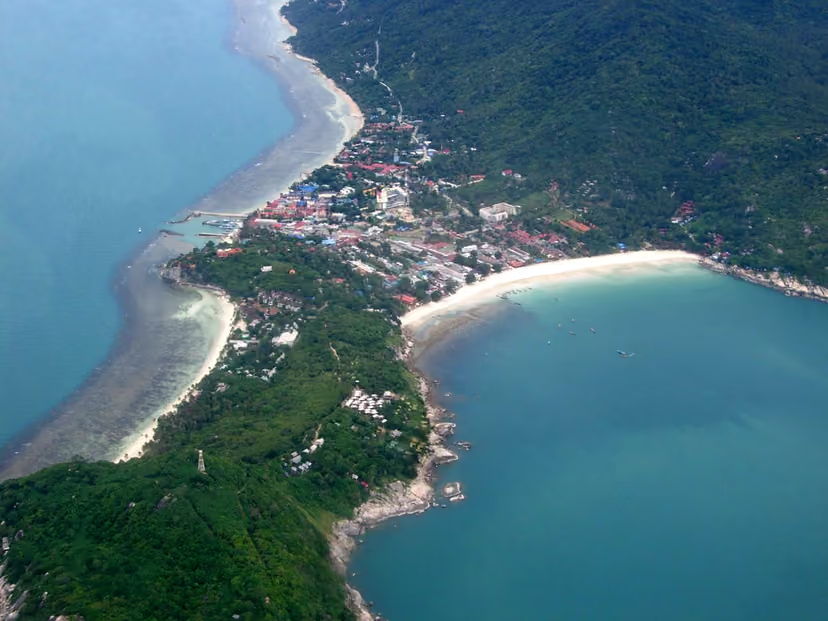
| Haad Yao | West | Wikivoyage describes a long white sandy beach, slightly more developed, with a 7-Eleven, ATMs and restaurants. The travel guide lists it among the family beaches. |
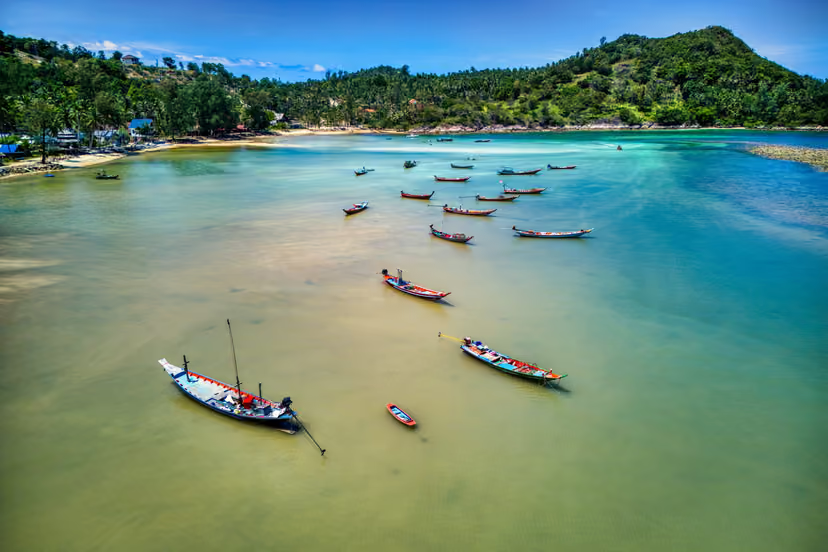
| Chaloklum | North | A former fishing village with a family-oriented pace, in the travel guide’s words. Wikivoyage describes a long sandy bay with a narrow beach under palm trees in the western part. |
| Haad Khom | North | Wikivoyage warns of very shallow water at low tide and says to be careful. It has around five places to stay. |
| Bottle Beach | North | Reachable by longtail boat from Chaloklum, with no ATMs, 7-Elevens or local restaurants, according to Wikivoyage. Plan food and cash ahead. |
Which season
Wikivoyage gives December to March as the best and high season, with clean water good for swimming, and July and August as another high season. The travel guide names January to early April and mid-June to September as the best times, with frequent rain from September to November, sometimes intense in October and November.
The Thai Meteorological Department normals for 1991 to 2020 at Ko Samui, the nearest station, make October to December the wettest months: 294.9 mm of rain in October, 444.6 mm in November and 263.1 mm in December, against 64.3 mm in February. December can therefore still be wet, which fits Wikivoyage’s note that the November monsoon normally ends around the middle of December. The UK government gives the rainy season as usually November to March for Koh Samui and south-east Thailand, and generally May to October for the rest of the country. Check a current forecast and our guide to Koh Phangan weather by month before you fix your dates.
Sea safety
The FCDO safety advice for Thailand advises care when swimming off coastal areas, especially during monsoon season, and says people have drowned in strong riptides. It says lifeguards are on duty at designated beaches and that Thailand operates a flag system for safe swimming. Follow warning signs, especially red flags, and ask your accommodation whether your beach has a lifeguard or flags.
Jellyfish can swim close to the shore, particularly during the rainy season from May to October, and the FCDO says stings can be fatal. It advises taking local advice from your accommodation and dive centres.
The CDC page for Thailand adds advice that applies to children:
- Swim only in designated swimming areas, follow lifeguards’ instructions and watch the flags.
- Children should wear lifejackets and be supervised in or near water.
- Do not dive into shallow water.
- Avoid swallowing water. Do not swim in fresh, unchlorinated water such as lakes, ponds or rivers, because leptospirosis is found in Thailand.
The FCDO also warns that currents near waterfalls can be extremely strong, particularly in the rainy season. For passenger boats between the mainland and islands, it names overloading, poor maintenance and rough seas in monsoon season as the usual causes of accidents.
Health basics
Vaccinations
The CDC page lists routine and travel vaccines for Thailand. Besides routine vaccines such as MMR, it recommends hepatitis A for unvaccinated travellers from 6 months of age, hepatitis B for unvaccinated travellers under 60 and typhoid for most travellers. Japanese encephalitis and rabies vaccination depend on the length and kind of trip. Go through the list with your doctor or travel clinic at least a month before the trip, as the CDC advises. It also notes that vaccines cannot protect you from many diseases in Thailand, so behaviour still matters.
The CDC lists Koh Phangan among places with rare to few malaria cases and does not recommend preventive malaria medicine there; it advises bite prevention instead. Check with your doctor.
Mosquitoes and dengue
According to the CDC, dengue, Zika and filariasis are spread by bugs and cannot be prevented with a vaccine. Its advice for families:
- Cover exposed skin and sleep in air-conditioned or screened rooms.
- Use a repellent with 20% or more DEET against ticks and mosquitoes. Picaridin, oil of lemon eucalyptus (OLE), IR3535 and 2-undecanone also help against mosquitoes.
- Do not use OLE products on children under 3 years. Children over 2 months can use DEET up to 30%.
- Protect infants under 2 months with a carrier draped in mosquito netting.
- Adults apply repellent to their own hands first, then spread it on the child’s skin. Do not put it on children’s hands.
Sun, heat and food
The CDC advises seeking shade from 10:00 to 16:00 and using sunscreen of SPF 15 or higher. It recommends sunscreen for children over 6 months, while babies under 6 months should stay in the shade and wear covering clothing. Diarrhoea can dehydrate small children quickly, and oral rehydration salts should be used to prevent dehydration. Watch for signs of severe dehydration such as a fast pulse, sunken eyes or crying without tears, and seek medical attention at once.
Animals
The CDC names dogs, monkeys, jellyfish and snakes among the animals to be careful around. Children should not touch animals and should tell an adult about any contact. If a child is bitten or scratched, wash the wound with soap and clean water and see a doctor right away. Rabies must be treated quickly.
Medical care on the island
The sources used here do not list clinics, hospitals or opening hours on Koh Phangan, so none are stated on this page. Before you travel, ask your accommodation for the nearest clinic and carry a written list of local doctors and hospitals, as the CDC advises.
The CDC gives these emergency numbers for Thailand: 1669 for an ambulance, 199 for fire and 191 for police. It warns that trauma care centres are uncommon outside urban areas and suggests medical evacuation insurance. Check that your policy covers the children and any scooter or car use.
Getting around with children
Wikivoyage describes the scooter as almost the only way to get around, and notes that most roads outside Thong Sala have no sidewalk. The CDC advises avoiding motorbikes, especially motorbike taxis, and wearing a helmet if you ride. The FCDO says helmets are required by law and that scooters for hire in tourist areas are often unregistered. It also says not to hand over your passport as a guarantee to a rental business.
Other options for families:
- Hire car or jeep. The travel guide says a car is sometimes more economical and safer for families, and budgets 800 to 2,000 baht per day depending on the model (as listed on 4 October 2026). Wikivoyage mentions small manual 4WDs at the price of two scooters.
- Songthaew. Wikivoyage says all taxi service on the island is by songthaew and calls it a pick-up truck, while the travel guide describes converted vans. The CDC says children should not ride in the bed of a pickup truck or an open vehicle without restraints. It also says children under 40 lbs (about 18 kg) should be restrained in car seats or booster seats, which may be limited or unavailable, so you may need to bring your own. Check what vehicle you are boarding.
- Steep roads. The travel guide warns that the coast toward Thong Nai Pan has very steep grades that are slippery in rain.
Avoid driving at night; the CDC notes that street lighting in parts of Thailand may be poor.
Quiet areas and Full Moon nights
The Full Moon Party takes place at Haad Rin once a month. The travel guide advises avoiding the south coast that night and says the rest of the island keeps its calm. The FCDO says violent sexual assaults and unprovoked attacks are most common during full moon parties or similar events and near bars late at night.
Wikivoyage advises booking ferries to and from the island ahead near the party, because the limited ferries fill up quickly, and the travel guide says Haad Rin accommodation fills 1 to 2 months before the date. The party usually falls on the full moon night, but a published party schedule notes that it is sometimes moved off the full moon because several Buddhist holidays fall on full moon days, so reconfirm the date before booking.
For quiet, the travel guide points to the west and east coasts. Wikivoyage describes a string of quiet bays on the west coast, naming Haad Yao, Haad Son and Haad Salad, and calls Haad Chao Phao a small quiet beach about 15 minutes from the main pier by taxi. In the north and east, Chaloklum and Thong Nai Pan are the areas the travel guide describes as family-oriented and calm. For a place to stay, see our pick of the best family villas.
Family day trips
Than Sadet
Than Sadet is part of Than Sadet–Ko Pha-ngan National Park, established on 22 November 2018 according to Wikipedia. Wikipedia describes the river as a series of waterfalls and rock pools along 2.5 km, and says it offers trekking for the experienced. The travel guide gives about 3 km. Wikivoyage lists the park fee as 100 baht, or 20 baht for Thais (as listed on 4 October 2026), and says not to expect much water in the dry season. No child fee is listed.
Wikivoyage says Than Sadet Beach has a few places to stay and two restaurants. Given the CDC and FCDO advice on freshwater and currents near waterfalls, keep children out of the river pools.
Mae Haad and Koh Ma
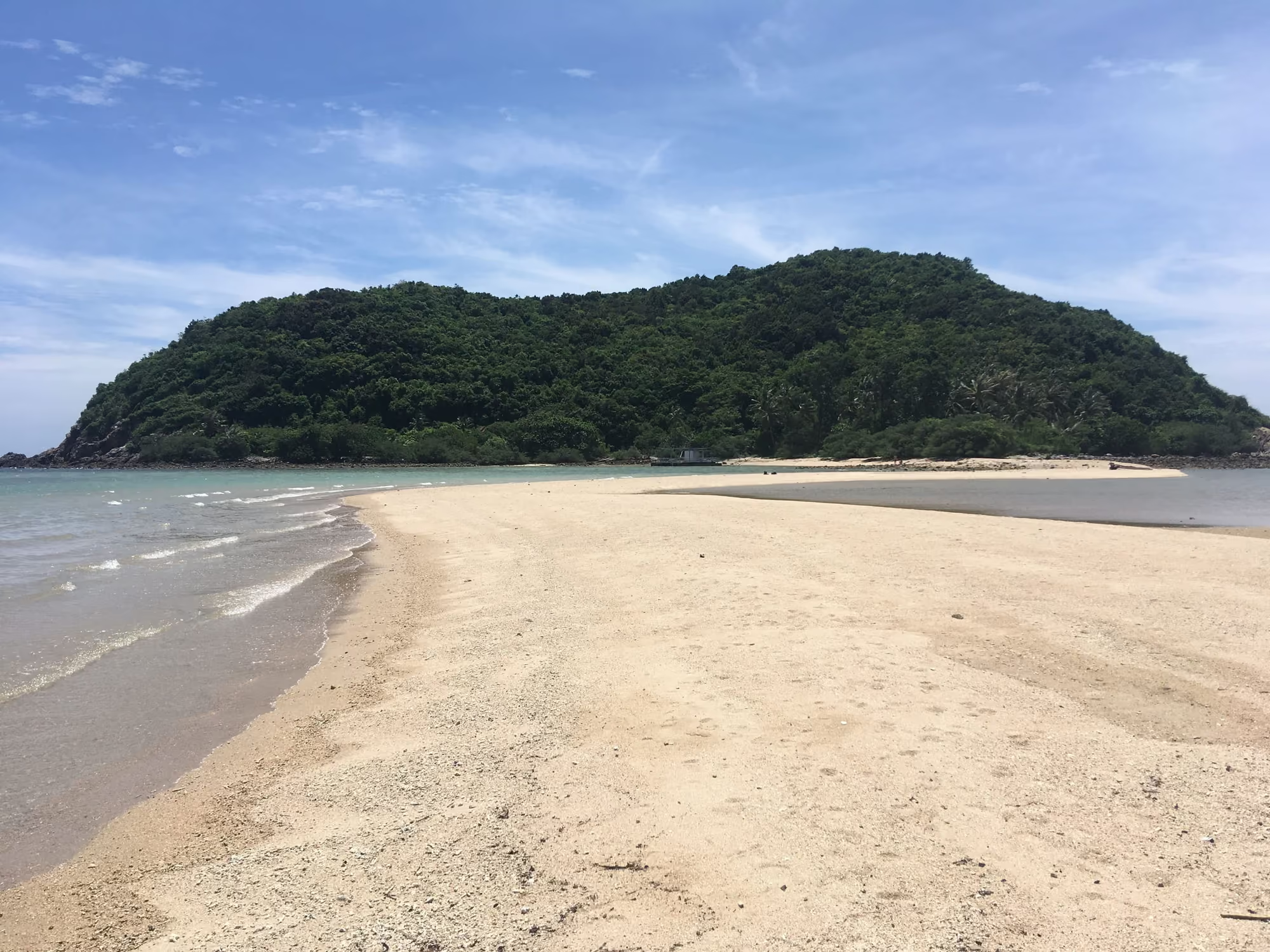
Wikivoyage describes Haad Mae Haad as a wide sandy beach joined to Ko Maa, a national marine park, by a sand spit. It adds that you need to cross a dead reef to reach the coral, and that doing so is difficult and painful when the tide is receding. It advises getting in and out at high tide. The travel guide says a stretch of sand appears at low tide, and recommends visiting Koh Ma early in the morning at low tide, before tour boats arrive. The two sources differ, so ask locally about the tide on your day.
Ang Thong
Wikivoyage describes Ang Thong National Marine Park as about 2 hours away by boat, a day trip booked through travel agencies, with snorkelling, swimming and kayaking. It says travel agents must be registered with the Tourism Authority of Thailand. Given the FCDO’s warning about overloaded boats, check that your boat has lifejackets for children.
How we checked
We compared two travel guides and a Wikipedia article on the national park with the FCDO and CDC pages on safety and health, the Thai Meteorological Department climate normals and a published Full Moon Party schedule, all read on 4 October 2026. Medical facilities, lifeguard coverage and child fees are not published in them, so confirm those locally.
Questions and answers
Which beaches on Koh Phangan are best for children?
One guide names Haad Salad, Haad Yao and Thong Nai Pan as combining calm beaches with suitable facilities for families. Wikivoyage also says Thong Nai Pan has safe swimming outside the November monsoon, which it says normally ends around the middle of December.
Are there rip currents and jellyfish around Koh Phangan?
The UK government (FCDO) advises care when swimming off coastal areas, especially in monsoon season, and says people have drowned in strong riptides. It also says jellyfish can come close to shore, particularly during the rainy season from May to October. It does not give beach-by-beach data for Koh Phangan.
What does the CDC say about dengue and vaccines for a Koh Phangan trip?
The CDC (a US source) says dengue, Zika and filariasis are spread by bugs and cannot be prevented with a vaccine, and stresses bite prevention. Vaccine availability differs by country, so ask your doctor or travel clinic. The same CDC page lists routine and travel vaccines for Thailand; go through it with your doctor at least a month before the trip.
Can children ride in the back of a songthaew?
The CDC advises that children should not ride in the bed of a pickup truck or an open vehicle without restraints, and that safety seats may be limited or unavailable. Wikivoyage describes Koh Phangan songthaews as pick-up trucks, while another guide calls them converted vans, so ask what vehicle you are boarding before you set off with children.
Sources (7)
- Ko Pha-ngan
- Koh Phangan: Complete Guide to Thailand's Island (Beaches, Yoga, Full Moon)
- Safety and security - Thailand travel advice
- Thailand - Traveler view | Travelers' Health
- Than Sadet–Ko Pha-ngan National Park
- Thai Meteorological Department, Climatological Data of Thailand for 30 Year Period (1991-2020)
- Full Moon Party Thailand 2026 & 2027 Dates in Koh Phangan